All playbooks
Conversation Playbook
K–12 Classroom & Counselor Sessions — Teacher / School Counselor
Better Conversations | Stronger Relationships | Better Outcomes
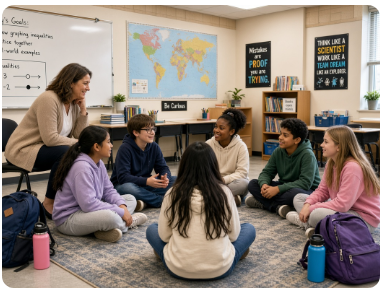
Use this during morning meetings, advisory periods, or individual and small-group counselor sessions to build students' Conversational Intelligence and character skills every day — not just during a crisis or a single scheduled lesson.
Before the conversation
- Frame it for students: this is a regular part of the day, not a one-time lesson — the same daily rhythm behind Morning Classroom Conversations, so students come to expect a real conversation, not a lecture.
- Keep it short and consistent. Ten to fifteen minutes is enough. What matters is that it happens regularly, not that any single conversation runs long.
- Model it yourself first. Students build Conversational Intelligence largely by watching an adult name and manage their own emotions out loud — not just by being told to.
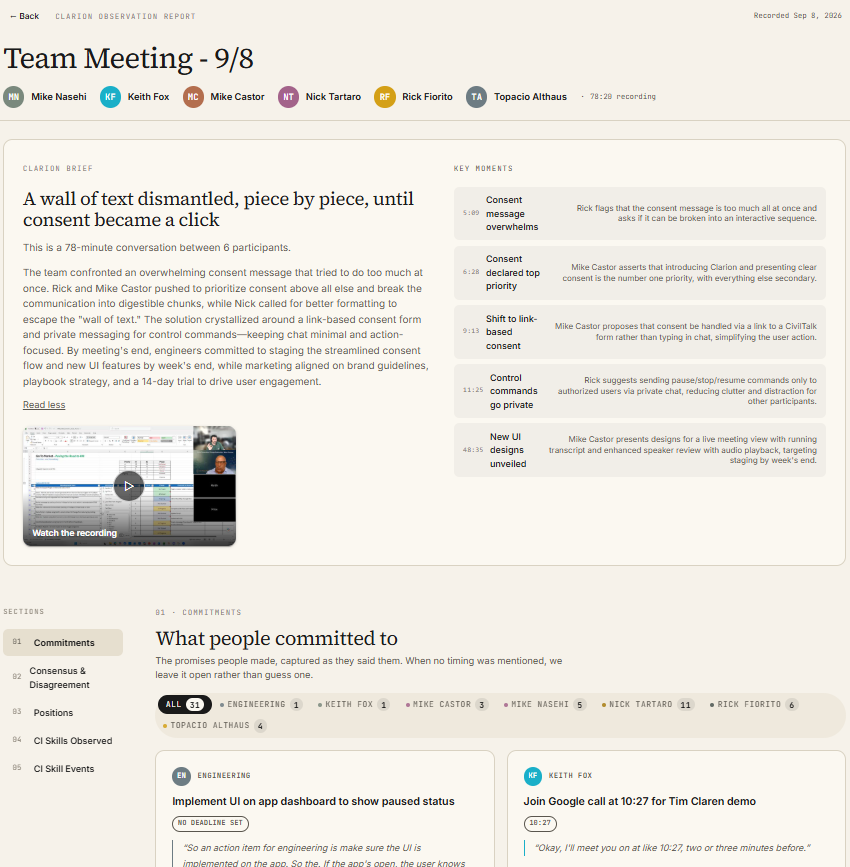
- Review your Clarion CI Report from the last session for 10–15 min beforehand to see what's shifted and which threads are worth returning to.
- Clarion includes features built around consent, school privacy law (FERPA), and how data involving minors is handled — but every school, district, and state is different. Before using Clarion in any setting involving students, confirm the details with your school or district's own legal counsel. This playbook is not a substitute for that advice.
- Visibility into the report is limited to the student's teacher, counselor, and parents upon request — consistent with FERPA's limits on who may see education records without separate consent (20 U.S.C. § 1232g(a)(1)(A); 34 C.F.R. §§ 99.10, 99.31(a)(1)).
Build all four domains, a little every day
Self-Awareness
- "What is one feeling you have today? Where do you feel it in your body?"
- "What did you do this week that surprised you?"
Self-Management
- "What made you upset this week? What helped you feel calm again?"
- "What can you do if you have a lot of big feelings today?"
Social Awareness
- "Tell me about a time you knew a friend was sad before they said so."
- "How might someone else here think about this in a different way?"
Relationship Management
- "Tell me about a time you and a friend did not agree. How did you fix it?"
- "What is one way you can show a friend you are listening today?"
What you'll notice over time
- Which students consistently struggle to name a feeling versus manage one — a distinction that only becomes visible once you're listening for it across weeks, not one conversation.
- Whether a conflict in the room is really about the issue, or about a relationship that needs repair.
- An informal, running sense of classroom or caseload climate — who's turning toward each other after a disagreement, and who's still turning away.
Educator & counselor reminders
- Don't rush past silence — kids often need longer to find words for a feeling than adults expect.
- Rotate through all four domains across the week or month, rather than defaulting to your favorite — the practice is only as strong as its least-visited domain.
- Loop caregivers in where you can. The same skills need reinforcement at home, not just at school.